Plants, Mountains Play Important Role in Iron Cycle
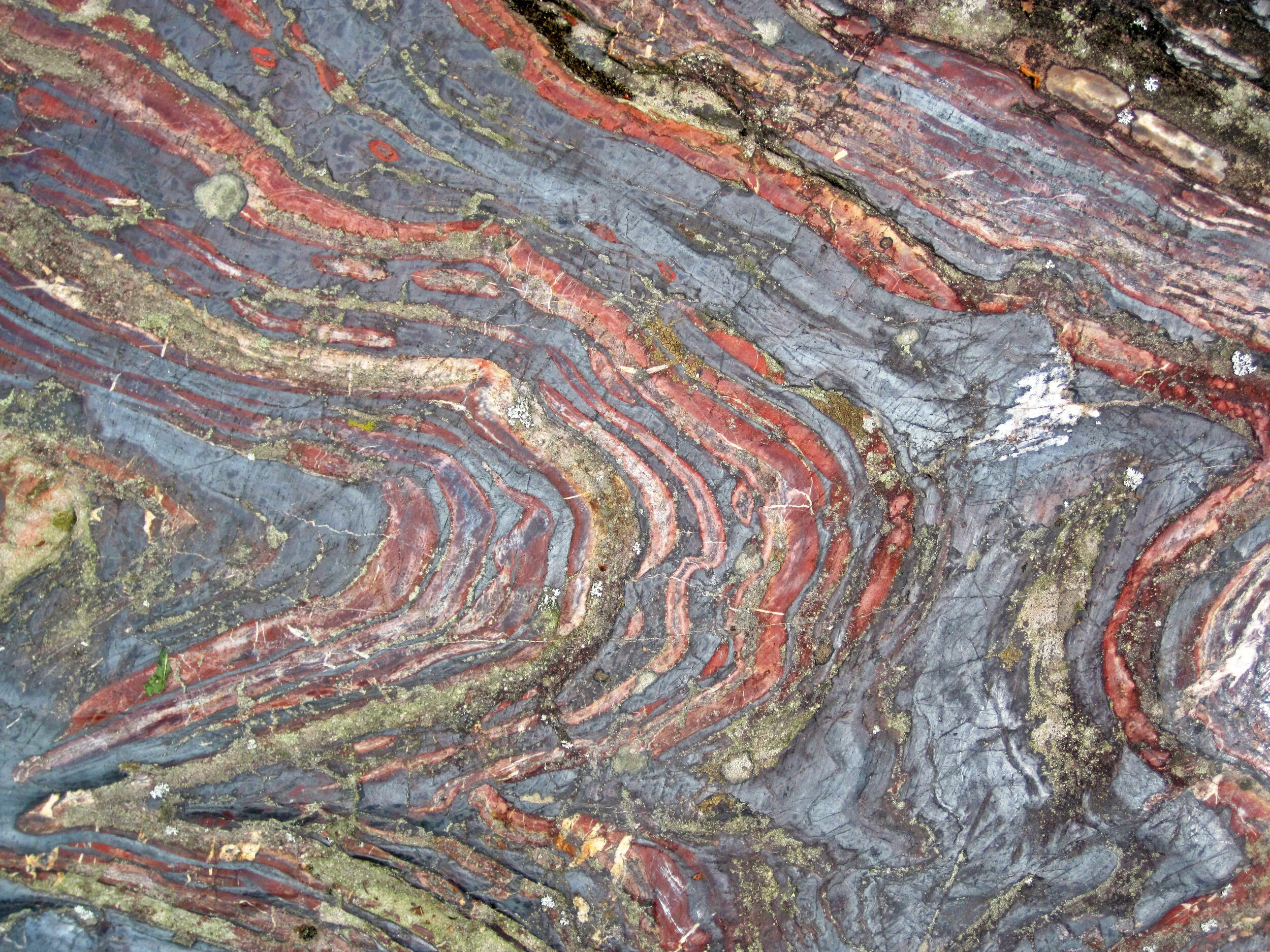
The iron record, long believed to chronicle changes in oceanic and atmospheric oxygen levels, may also reflect mountain building events and the evolution of plants on land
Our planet is constantly evolving. The atmosphere surrounding the young Earth would have been toxic to most organisms alive today. It took marine microbes millions of years to churn out enough oxygen to form the protective ozone layer that allowed complex animals and plants to develop.
Geologists traditionally look at the iron record to mark the period where Earth’s oceans and atmosphere became oxygenated. A new study clarifies how events during the past 500 million years can help scientists interpret this record.
“The iron cycle has new things to tell us,” said Dalton Hardisty, the Endowed Assistant Professor of Global Change Processes at Michigan State University and co-author on the study. “The record may reflect the delivery of iron from land, telling us more about changes of Earth’s surface, weathering processes, and land plants.”
These insights could aid scientists in how they review past environmental conditions and make inferences about the planet’s future. The results are available in the journal PNAS.
The Long Record of Iron
Iron can take many forms. Most people are familiar with rust, which has the same chemical formula as the mineral hematite that forms when iron combines with oxygen. In the absence of oxygen, iron can dissolve in water or combine with sulfur to produce pyrite, commonly called “Fools Gold.”
Throughout most of Earth’s history, the ocean was enriched in dissolved iron. In the absence of oxygen, the dissolved iron combined with sulfur to form pyrite. Early marine microbes released oxygen as a byproduct of photosynthesis. This oxygen also combined with the dissolved iron to form hematite. A prominent example includes the banded iron formations found across the Lake Superior region of Michigan and Minnesota.
Geologists look to the rock record and use the transition from pyrite to hematite to mark the transition when the ocean, and subsequently the atmosphere, became oxygenated.
Iron is an important element, because it is essential for many biological processes. While among the most abundant elements on Earth, a form that is bioavailable can only be found in trace amounts throughout the ocean today. Bioavailable forms of iron have been scavenged through natural processes and locked away in ocean sediment and rocks on land.
A New Theory Emerges
Hardisty joined colleagues from the University of Hamburgh, Germany and ETH in Zurich to focus on iron cycling at Earth’s surface. The team augmented data gathered from the Sedimentary Geochemistry and Paleoenvironments Project database to reconstruct the iron record for a vast segment of recent geologic history, spanning the last 1.2 billion years.
Their analysis made two remarkable insights. First, continents played a critical and underappreciated role in supplying iron to the ocean. Second, pyrite formed from the continental supply of iron was important in Earth’s oxygenation.
“The iron that we were tracing was tracking more than changes in oxygen in the ocean, which is how the records were interpreted in the past,” said Hardisty. “We didn’t tear down the tool; we added another component to it to broaden the application and added new insight.”
For the oldest portion of the study, the researchers found the long-standing theory holds. The iron records in ocean sediment was controlled by low oxygen conditions. As the concentration of oxygen in the environment increased, the team found that continued pyrite formation alongside photosynthesis provided a one–two punch to the planet’s oxygen supply. As the oxygen concentration increased, it depleted the remaining dissolved iron in the ocean.
At this point, the delivery method of iron to the ocean took center stage. The team found that peaks in the iron record coincide with major mountain building events during the past 500 million years. They showed that prominent events that altered Earth’s surface—the break-up of the supercontinent Rodina, the Pan-African mountain building event that led to the formation of the supercontinent Gondwana, the Alpine mountain building event that formed the Alps, Pyrenees, Carpathian, and Caucasus mountains, and the Variscan mountain building event that led to the formation of the supercontinent Pangea—correlate to prominent peaks in the iron cycle. According to Hardisty, the change in elevation combined with atmospheric oxygen intensified weathering of the iron-rich rocks at Earth’s surface.
Plants on land accelerated the delivery of iron in several important ways. Hardisty explained that plant roots exude chemicals that enhance erosional processes and aid in breakdown of rocks and sediment. Land plants also hold sediments in place to stabilize streambeds, allowing sufficient time for the conversion of the iron in rocks into iron-oxide minerals. This steadfast conduit carried the iron-oxide minerals to the ocean, a new source for the iron record.
Insight for a Warming Planet
Over the past century, human activities have imposed a period of warming on the planet. While not a focus of this study, understanding past processes can help scientists make inferences about the future. Warmer temperatures have accelerated weathering on land, delivering more iron-rich minerals to the ocean. At the same time, warmer surface ocean conditions are limiting the mixing of surface water with depth, depriving the deep ocean of its primary infusion of oxygen. This scenario could lead to the formation of or, in some cases, expansion of marine oxygen minimum zones. These regions could mobilize iron in the environment, harkening to a more primordial time of Earth’s history.
“Iron remains an important way to understand the past,” said Hardisty. “Our findings will help researchers by expanding their tools to continue to study how climate change will affect the planet.”
The study received financial support from the German Research Foundation.
The Michigan State University release is also available.
